

Within the extensive family of refractory materials—alongside the well-known high-alumina, silica, and fireclay bricks—there is a category that is often overlooked: semi-silica brick. In terms of performance characteristics, it occupies an intermediate position between silica and fireclay products. Thanks to its dimensional stability and resistance to acidic slags, it can be successfully used in various industrial furnaces.
What is semi-silica brick?
Semi-silica brick is classified as a semi-acidic refractory product. In terms of chemical composition, the aluminum oxide (Al₂O₃) content is 15–30%, and the silicon dioxide (SiO₂) content exceeds 65%.
The raw materials used are primarily natural high-silica clays and pyrophyllite, as well as mixtures of clay and quartzite. Essentially, this combination of siliceous and clay-based materials ensures balanced and practical performance characteristics.
Operational advantages
Semi-silica brick successfully compensates for the shortcomings of Dinas and fireclay bricks:
-
Its thermal shock resistance is superior to that of silica-based products. Compared to pure silica materials, it withstands rapid temperature fluctuations better and is less prone to cracking and spalling during thermal cycling.
-
High dimensional stability ensures a tight masonry structure. Under high-temperature operating conditions, the change in volume is negligible; in fact, slight expansion is observed in certain modes, which helps maintain the lining's tightness and reduces flue gas leakage.
-
Good resistance to corrosion by acidic slags.
-
Relatively high deformation temperature under load. The product retains its shape under high-temperature loading; in some cases, its service life is comparable to that of standard fireclay brick.
Useful information: the properties of semi-silica brick depend heavily on the particle size distribution of the raw materials. Larger quartz grains result in slightly lower product density and room-temperature strength, but improve thermal shock resistance and the temperature of deformation under load. Finer quartz grains yield a denser brick, though refractory performance is somewhat reduced. Therefore, the ratio of grain fractions is selected during production based on specific service conditions.
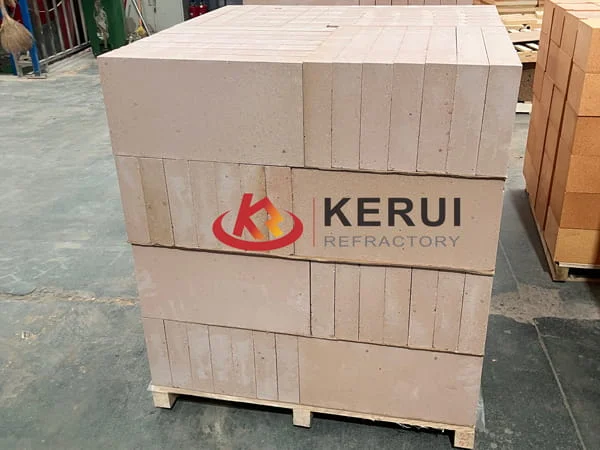
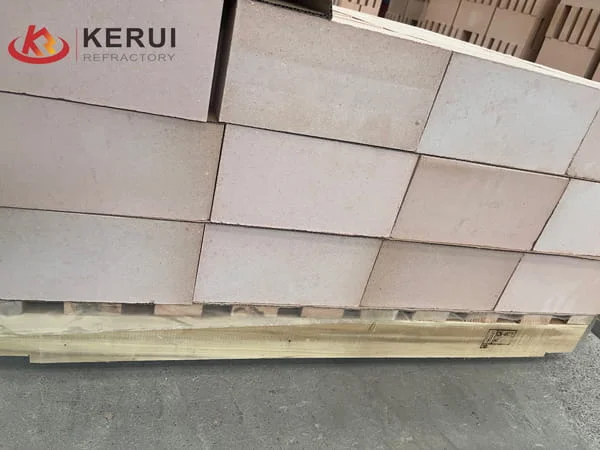
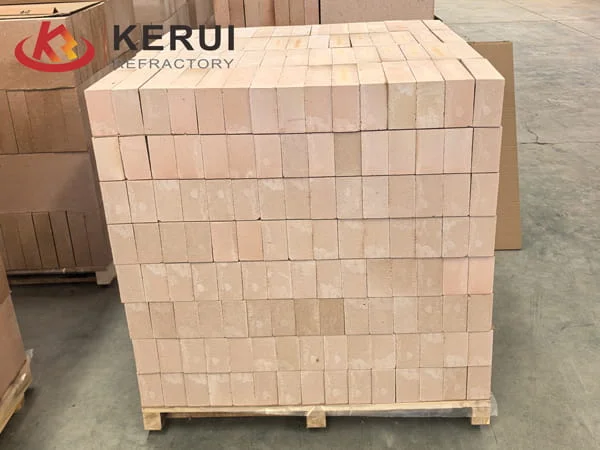
Specifics of the technological process
Semi-silica brick is produced in two types: fired and unfired. For unfired products, sodium silicate is most commonly used as the binder. The general production process for fired bricks is similar to that of fireclay products but differs in four respects.
-
The amount of chamotte added depends on requirements. Since the firing shrinkage of siliceous clay is low, it is possible to dispense with chamotte additions; however, if increased thermal stability is required, 10–20% chamotte is introduced into the batch.
-
The particle size distribution of the quartz grains is selected based on operating conditions. The use of coarse or fine fractions of quartz sand and quartzite chamotte is determined by the actual operating conditions of the furnace.
-
Higher firing temperature. Shrinkage of the green brick is minimal up to 1250°C; however, with a further rise in temperature, shrinkage becomes significant due to an increase in the liquid phase. The firing temperature for semi-silica brick is typically maintained between 1350°C and 1410°C—higher than that for standard fireclay brick—which is necessary to achieve the required product density.
-
Pyrophyllite-based raw materials require special monitoring. Pyrophyllite exhibits minimal mass loss upon dehydration and retains its crystal structure; consequently, the raw material can be used in an uncalcined state for brick production, thereby reducing manufacturing costs. To prevent excessive expansion and a loss of strength during firing, a small amount of pre-calcined pyrophyllite grog may be added. Furthermore, pyrophyllite has very low water absorption, so the moisture content of the molding mix must be strictly controlled to avoid the formation of cracks during the molding stage.
Main areas of application
Semi-silica brick is frequently used in industrial thermal units that operate in contact with acidic slags and require airtight masonry—for example, in coke ovens, acid-lined cupolas, metallurgical furnace flues, steel-teeming ladle linings, and other components.
Semi-silica brick is not distinguished by any single outstanding property; rather, its advantage lies in a balanced combination of characteristics. The combination of heat resistance, resistance to acidic slags, and dimensional stability makes it a cost-effective refractory material for the linings of certain industrial furnaces. However, when selecting the material, it is essential to consider the furnace operating temperature, the nature of the slag, and temperature fluctuations, as well as to choose the appropriate batch composition and technical specifications to fully realize its operational potential.